The Unread Archive
Anthropic’s agents found an uncatalogued CRISPR-like enzyme system by re-reading 1.9 billion public protein clusters — then missed it in all ten reruns. Plus: Boehringer bets over $1B on splicing targets hiding in old transcriptomic data, the NIH ships a PubMed tool that surfaces the papers citation counts bury, Washington reportedly queues frontier-model access ahead of the UK’s evaluators, and the Onion Desk.
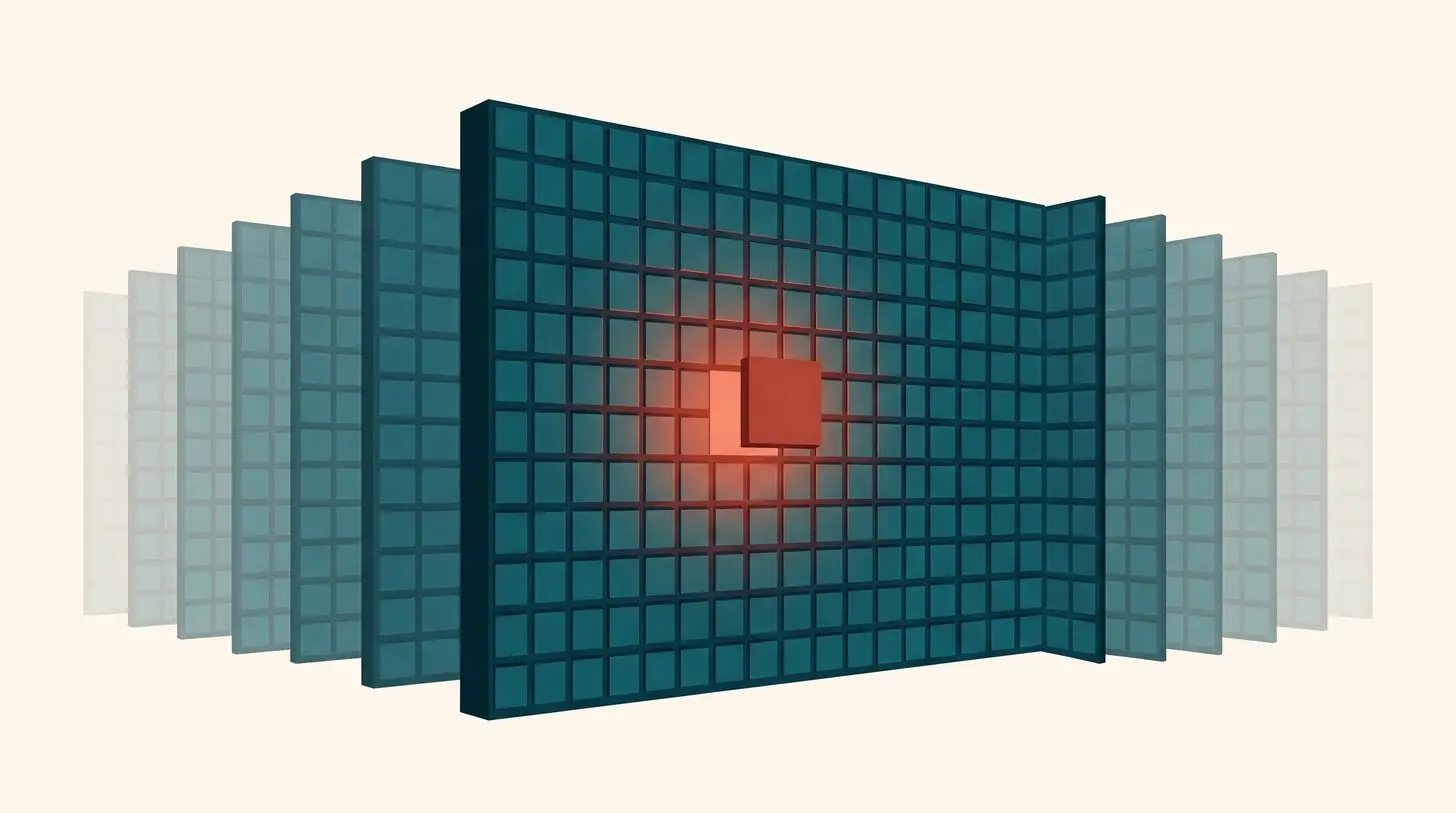
This is the full September 29 briefing, reproduced here in its entirety. This week’s theme: the unread archive. Not one of this week’s significant results came from a new experiment. An AI agent found a possible new enzyme system by re-reading 1.9 billion protein clusters that were already public. Boehringer Ingelheim committed over a billion dollars to targets sitting inside transcriptomic data the field has held for a decade. The NIH shipped a tool whose entire purpose is to surface the papers PubMed’s citation gravity has been burying since 1996. The bottleneck these three attack is the same one: we have generated far more biological data than we have read, and the returns on re-reading are now high enough to price. Which makes the fourth story the one that matters most in five years — because if discovery is becoming a function of who can point a capable reader at the archive, then the fight over who gets access to the readers stops being an AI-policy story and becomes an R&D-strategy story.
Claude found a CRISPR-like system nobody had catalogued — and missed it ten times out of eleven
PapersWhat’s new — Anthropic says its model autonomously identified a previously uncharacterised enzyme system in bacteriophage DNA, with an architecture reminiscent of CRISPR and an unknown function.
What happened — On September 23, Anthropic published early results from the molecular biology group and wet lab it stood up in spring 2026. Given a single high-level brief — find new reverse-transcriptase systems — agents searched a database of roughly 1.9 billion protein clusters and flagged what the company calls array-associated reverse transcriptases (ART), found in Staphylococcus phages. Per Gizmodo, the campaign ran about 21 hours across roughly 950 agents and 210 million tokens; the company’s own lab then confirmed the architecture experimentally.
How it works — A reverse transcriptase copies RNA into DNA; bacteria use these enzymes in antiviral defence. The enzyme itself was already known. What was new was the neighbourhood: a long run of evenly spaced DNA repeats sitting beside the gene, plus a partner protein of unknown function. That repeat-array layout is what makes CRISPR systems programmable — the array stores a bank of guides. Structurally, ART has a combination of features that, as Anthropic notes, has only ever co-occurred in a handful of systems, all of which cut, copy or paste DNA. The agent architecture was two-tier: one agent planned and executed each task, a second reviewed it, and new tasks were spawned as leads opened.
Results — Agents screened more than 200,000 reverse transcriptases, narrowed to ~3,500 candidate systems, and selected 20 for detailed analysis, according to The Conversation. The number that deserves more attention than the discovery: Anthropic re-ran the identical campaign ten more times, and per TNW’s account, no rerun read the DNA upstream of the enzyme — all ten missed the array entirely.
Key insight — The interesting claim is not that a model found something. It is that the model chose which of thousands of leads was worth escalating to a wet lab. That is the expensive judgment in discovery biology, and it is also the one we have no way to score. A 1-in-11 reproduction rate tells you this is a high-variance lottery with a cheap ticket, not a reliable instrument.
Behind the news — Anthropic acquired Coefficient Bio for a reported $400 million in April and launched its Claude Science workbench in June; this is the first public output of that build. Microbiologist Kevin Blake of Washington University told Al Jazeera that CRISPR-in-nature is a bacterial immune system and CRISPR-the-technology is a different thing entirely, and that uncatalogued CRISPR-like sequences are abundant because most bacterial species have never been studied. As Quartz noted, the company has not determined what ART does. The announcement went out minutes before the UN Security Council convened on AI safety.
Why it matters — Every large pharma sitting on decades of unmined internal sequence, assay and imaging data now has a concrete template: point agents at the corpus, accept a poor hit rate, and budget wet-lab capacity for the tail. The constraint is no longer compute or model quality. It is whether you have an in-house lab that can validate a machine-generated lead in weeks rather than quarters — which is exactly why Anthropic built one.
We’re thinking — The reproducibility number is the story, and almost every outlet buried it. Ten failed reruns means the discovery was not a capability, it was a sample from a distribution — and an organisation deciding whether to fund an agentic discovery program should be modelling it as a portfolio of cheap lottery tickets with expensive validation costs, not as a tool that reliably does a thing. That framing changes the org design: you need throughput on confirmation, not on generation. Second-order effect worth pricing now: if variance this high is inherent, the competitive moat shifts from model access, which everyone will have, to wet-lab cycle time, which almost nobody has. Watch for pharma to start acquiring or building small, fast, dedicated validation labs whose only customer is the agent fleet — and watch for the first serious paper that tries to measure discovery-agent hit rates across reruns, because right now the field is reporting its wins and quietly discarding its denominators. The honest read is that Anthropic did the right thing by publishing the ten failures. The field’s response to that disclosure will tell you how much of this is science.
Sources: Anthropic · Gizmodo · The Conversation · TNW · Al Jazeera · Quartz
Boehringer bets over $1B that the targets were in the splicing data all along
PartnershipsWhat’s new — Boehringer Ingelheim and Envisagenics announced a multi-year collaboration and option agreement on September 22, with Envisagenics eligible for more than $1 billion in upfront, research funding, option fees, milestones and royalties.
How it works — Alternative RNA splicing lets one gene produce multiple protein isoforms. When splicing goes wrong in tumours, it can yield protein variants that exist in cancer cells and almost nowhere else. Envisagenics’ SpliceCore platform applies machine learning across large-scale transcriptomics to find them; the company says its database now holds over 14 million distinct splicing events. Boehringer may deploy validated targets across ADCs, T-cell engagers and multispecific antibodies.
Behind the news — Envisagenics has previously worked with J&J, Biogen and Bristol Myers Squibb. Per European Biotechnology, the deal is exclusive only to Boehringer’s selected targets, not to the platform or the wider portfolio — a structure worth noting for anyone negotiating a discovery alliance. Fierce Biotech points out Boehringer’s prior AI partnerships with Immunai and OpenProtein.AI.
Why it matters — This is AI moving upstream. Most pharma AI spend to date has optimised molecules against targets humans picked. Here the machine picks the target, and the pharma partner supplies the modality expertise and the validation. If splicing-derived isoforms hold up as genuinely tumour-selective, the addressable target space widens materially at a moment when the conventional target list is visibly crowded.
We’re thinking — Biobucks headlines are close to meaningless and the undisclosed upfront is the only number that would tell you what Boehringer actually believes. But the deal structure is the signal: target-level exclusivity rather than platform exclusivity means Envisagenics kept the right to sell the same capability to Boehringer’s competitors, and Boehringer accepted that. Platform companies are winning better terms than they did two years ago. The risk nobody is pricing is that isoform-level tumour selectivity is notoriously hard to confirm at the protein level — transcript evidence is not expression evidence, and an ADC pointed at an isoform that is only sometimes translated is an expensive tox study waiting to happen.
Sources: GlobeNewswire · European Biotechnology · Fierce Biotech
The NIH built a tool to find the papers the citation graph hides
Product launchWhat’s new — The NIH’s National Library of Medicine released a pilot feature called Linked Discoveries on PubMed on September 24, designed to show how a given paper connects to the work around it.
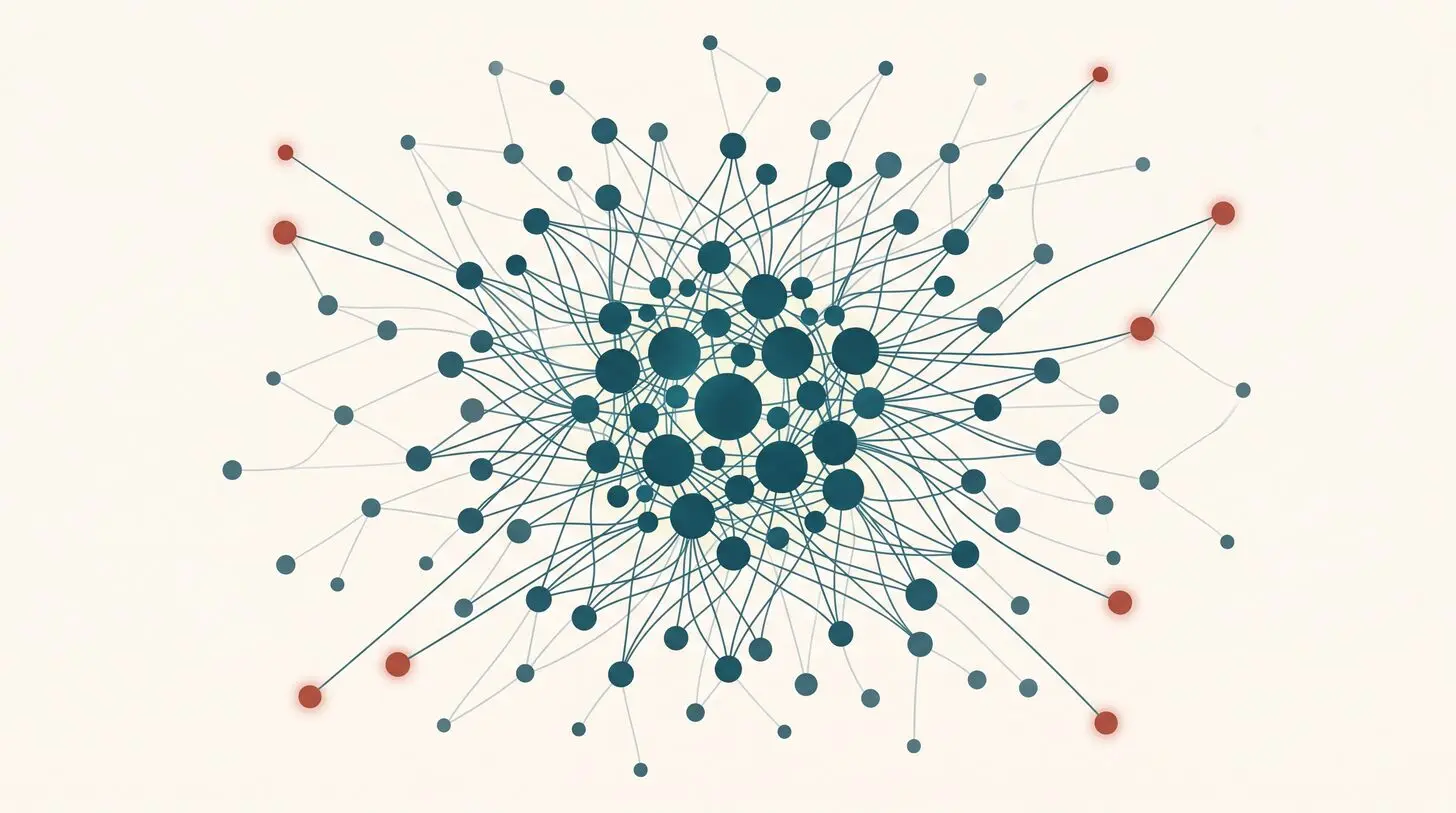
How it works — Clicking through from a paper’s PubMed page pulls up a map of its citation “neighbourhood” — what it cites, what cites it, relative influence, and which topics recur. The stated purpose, per NLM deputy director Stephen Sherry, is to counteract the fact that heavily cited findings absorb attention while contradictory and null results go unseen. Notably, it is built on BiomedBERT, a publicly available language-processing model, rather than a frontier LLM, and recalculates relationships daily as new articles arrive.
Why it matters — Every target-validation decision in your organisation rests on a literature review that someone did under time pressure, weighted by citation count. A tool that systematically surfaces the replication failures and null findings adjacent to a hot paper changes the base rates on early go/no-go calls — quietly, and in the direction of fewer expensive mistakes.
We’re thinking — The unglamorous model choice is the most interesting decision here. An encoder from 2022 recalculating a citation graph daily is more auditable, cheaper and more reproducible than an LLM summarising the same literature, and for a public infrastructure tool that has to be defensible, that is the correct trade. Expect the commercial literature-intelligence vendors to have a harder quarter explaining their pricing. The open question is adoption: reproducibility tools fail not because they are bad but because nobody’s incentives reward using them, and a button that tells you your favourite target’s founding paper was never replicated is a button most programs would rather not press.
Sources: Fierce Biotech
Washington reportedly moves to gate who gets to evaluate frontier models
PolicyWhat’s new — Politico reported on September 24 that the White House asked OpenAI and Anthropic to withhold new frontier models from the UK AI Security Institute until US government review is complete, per an aggregated account of the week’s coverage.
Behind the news — It lands the day after Anthropic’s CEO asked the UN Security Council to back a narrow ban on AI-assisted bioweapons development, plus verification systems and common testing standards, per CNN. The UK AISI has been among the more technically serious pre-deployment evaluators of biological capability. A US-first access sequence would mean the body doing some of that work sees models later than the body sitting in Washington.
Why it matters — For European and UK life-science organisations, the practical question is not geopolitics but timing: if frontier model access follows a national queue, then so does frontier discovery capability, and any Vienna, Basel or Cambridge research plan that assumes same-day access to the best available reasoning model needs a contingency. It also sits awkwardly against the industry’s own proposal for international verification.
We’re thinking — Sourcing caveat first: we have this secondhand and have not independently confirmed the Politico report, so treat the specifics as provisional. That said, the direction is consistent with everything else in 2026, and the tension it exposes is real. You cannot simultaneously ask the Security Council for a cross-border verification regime on bioweapons capability and support a domestic policy that limits which national evaluator sees the models first — verification regimes are built out of exactly those institutions. The second-order effect for pharma is concrete and near-term: procurement teams should start writing model-access continuity into vendor contracts, because “our discovery pipeline depends on a US-gated model” is now an operational risk with a plausible failure mode, not a hypothetical.
Sources: explainx.ai (aggregating Politico) · CNN

Merck pays $400M upfront, up to $2.13B, for a preclinical KRAS G12D inhibitor from China’s SciBrunch
DealsA preclinical asset from conventional chemistry just cleared four hundred million in cash, which is roughly an order of magnitude more real money than any AI-discovery deal announced this month. Worth keeping next to the biobucks headlines.
Sources: STAT, Sept 28
Novartis pauses lifonebart, an anti-TREM2 antibody, after its fourth trial disappointment of the month
ClinicalTREM2 was a well-supported, human-genetics-backed target. No amount of better reading of the archive fixes the part where the biology simply isn’t causal in patients.
Sources: DDW, Sept 22
The FDA’s tracker now lists over 1,600 authorised AI-enabled medical devices
RegulatoryAlmost all cleared via 510(k) on predicate equivalence rather than patient-outcome data. The regulatory precedent being built here is procedural, and drug-side AI will inherit its assumptions.
Sources: FDA, as of September 2026
Research and Markets projects AI in drug discovery growing at a 28.7% CAGR through 2035 from a ~$2.4B 2025 base
Industry dataThe entire global market for AI drug discovery is smaller than the headline value of two deals announced this week. Either the forecasts are measuring software licences while the value accrues as milestones, or somebody’s model is wrong.
Sources: GlobeNewswire, Sept 23
Biotech Raises $140M To Train Model That Will Determine What To Do With The $140M
A London-and-Boston foundation-model company closed an oversubscribed round this week to train a new generation of biological models, having previously trained a generation of biological models, which were trained to identify what the next generation of models should be trained on. Investors expressed confidence that the next models will be materially better than the current models, a claim the current models were unable to evaluate. The company’s pipeline remains preclinical, a stage it describes as “advancing toward clinical development,” which is also how it described the pipeline before the round. A spokesperson confirmed the roadmap extends to a further generation of models, funded by a further round, informed by the models. The dataset is said to be more than ten times larger than all public resources combined, which is also ten times more data than anyone has read.
Genome Model Discovers That 84% Of The Genome Was Not Being Read, Blames Genome
Researchers announced that a new language model scanning bacterial genomes found the overwhelming majority of its predicted interactions fell outside every existing annotation, prompting immediate concern about the annotations. The team scanned 150 genomes in under two hours, a pace that microbiologists noted took the field approximately thirty years the first time. Follow-up work confirmed several predictions in living cells, though nobody yet knows what the confirmed things do. Funding bodies have requested that the model stop finding additional unexplained systems until the previously unexplained systems are explained. The model has not complied.
Startup Raises Money To Cure Diseases That Do Not Exist Yet But Will Be Invented By Its Investors
A biosecurity company profiled this week is developing antibody countermeasures against pathogens that current AI systems could theoretically help design, funded substantially by the company that builds those AI systems. The business model — sell the problem, then sell the solution, then sell the problem again — has been described internally as elegant and externally as a closed loop. Executives said the firm will begin with influenza before moving on to coronaviruses, filoviruses and smallpox relatives, in what industry observers are calling an ambitious roadmap and epidemiologists are calling a list of the worst things. Clinical trials are targeted for 2027, by which point the threat landscape is expected to have generously expanded. Investors called the arrangement a natural hedge.
Biosurveillance Device Weighs Fifty Pounds, Detects Airborne Pathogens, Cannot Be Lifted By Anyone In Biotech
A defence biotech raised a seed round this week for a roughly fifty-pound unit that samples air and sequences what it finds in near real time, providing early warning of engineered pathogens to anyone able to carry it up a flight of stairs. Early deployments are reportedly under way in locations selected partly for threat profile and partly for elevator access. The round was backed in part by individuals employed at a frontier AI lab, who are thereby funding both the detection of engineered biological threats and the models most often cited as making them easier to engineer. The company describes this as defensive co-scaling. Everyone else describes it as Tuesday.
What we’re watching
The concrete call: within the next two quarters, at least one top-twenty pharma will publicly announce a dedicated rapid-validation wet lab — small, in-house, and explicitly scoped to confirming machine-generated hypotheses rather than running a therapeutic program — because Anthropic’s ten failed reruns just made the real constraint legible, and it is confirmation throughput, not model access. The early confirming signal to watch is hiring, not press releases: job postings for molecular biology and automation staff reporting into a computational or data-science organisation rather than into discovery biology, plus any AI-platform company announcing a validation-capacity partnership with a CRO on a per-hypothesis rather than per-program basis. What would prove this wrong: if the next two quarters bring a published discovery-agent result that reproduces cleanly across independent reruns, the variance problem dissolves, validation stops being the bottleneck, and pharma will rationally keep buying model access and outsourcing confirmation as it does today. Watch the denominators. Anyone reporting only their hits is telling you they have not measured this.
Also this week
- Anthropic’s and OpenAI’s CEOs briefed the UN Security Council, with a proposed ban on AI-assisted bioweapons development
- Enveda raised $311M at a $2B valuation on the back of two positive early clinical readouts
- Genentech paid Earendil $55M upfront in a bispecific oncology pact worth over $1.5B
- Basecamp Research closed a $140M Series C to train its next EDEN foundation models
- Arc Institute and Stanford posted Minerva, a genome language model for coevolutionary mining
- The WSJ profiled Red Queen Bio, an OpenAI-backed biosecurity startup with $36M raised
- Pilgrim raised $25M seed for AI-era biosurveillance hardware, backed personally by Anthropic staff
- BindCraft2 shipped, adding VHH, scFv and humanisation to the open-source binder design pipeline
- Endpoints named its 2026 class of eleven startups, including self-driving labs and human tissue factories
Disclosure
This issue’s lead story concerns Anthropic, and this briefing is drafted with Claude, an Anthropic model — readers should weigh the lead accordingly. The lead rests primarily on Anthropic’s own publication plus independent commentary; the ART preprint is not peer-reviewed and the system’s function is undetermined. The policy story is sourced secondhand from aggregated coverage of a Politico report we have not independently verified. Deal values throughout are headline figures including undisclosed upfronts and contingent milestones, and should not be read as cash. Market forecast figures are vendor-published; a separate report from the same firm dated 18 September gave materially different 2026 and 2032 numbers, which is itself worth noting.
Format adapted from The Batch (DeepLearning.AI). Credit where it’s due — and worth subscribing to in its own right. Selected and reviewed by Igor Gridchyn, Ph.D. More at gridchyn.ai.
This issue’s prediction is tracked and scored in public. Prediction scorecard →
Help shape this newsletter — five quick questions, under a minute. Give feedback →