Pharma Stopped Buying Molecules and Started Buying Seats
Three enterprise AI contracts landed inside large pharma in eight days — Boehringer with Owkin, argenx with BenchSci, Takeda with Weave Bio — and not one of them is a discovery partnership with a headline biobucks number. They price on seats, term and data rights, clear procurement rather than the R&D committee, and appear in no deal tracker. Plus: a medicinal chemist does the arithmetic on “100 years of progress in 10”, Insilico posts its first profitable half-year, Generate’s AI-engineered antibody supports six-month dosing, and the Onion Desk.
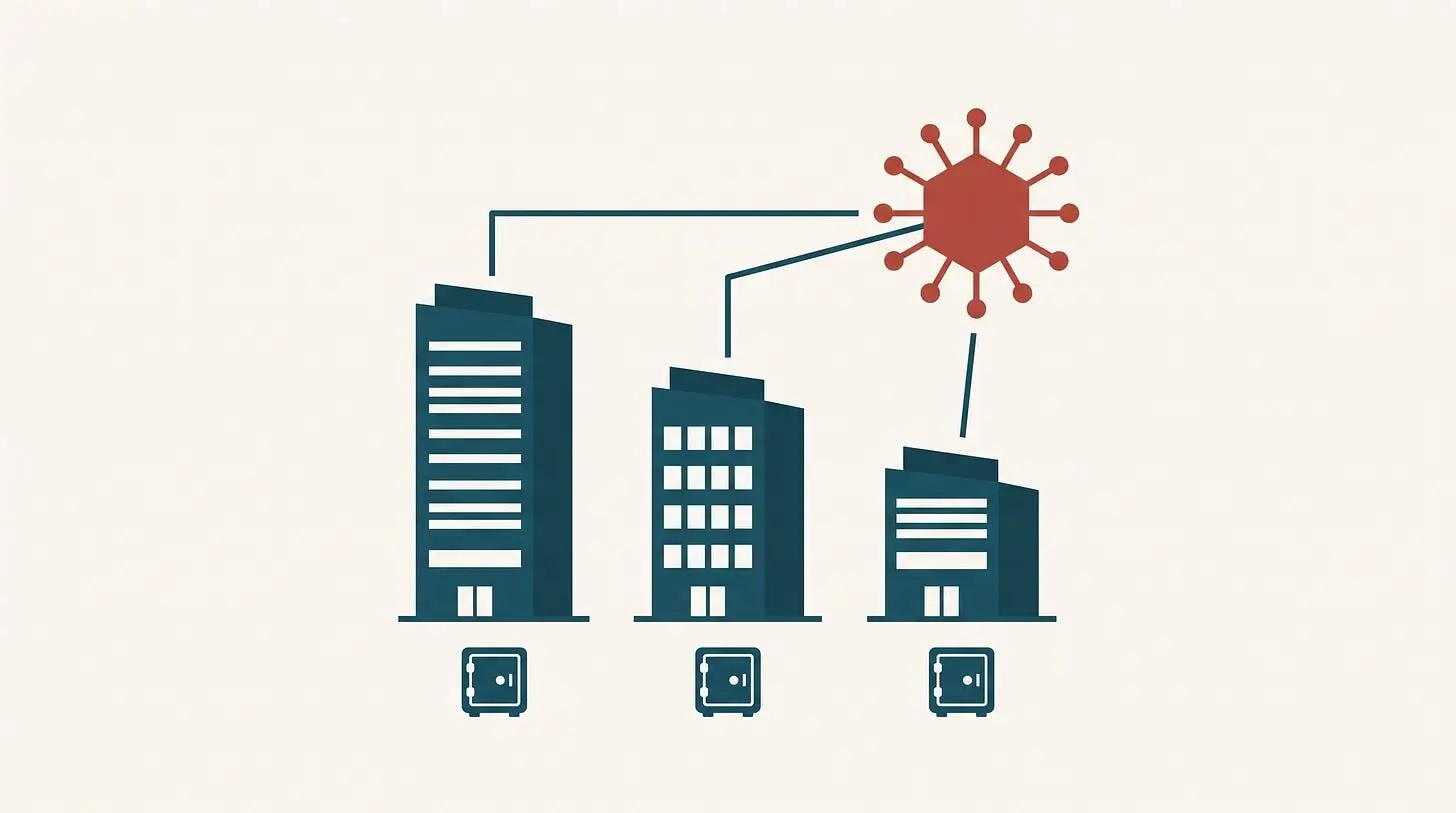
This is the full September 8 briefing, reproduced here in its entirety. This week’s theme: pharma stopped buying molecules and started buying seats. Three enterprise AI contracts landed inside large pharma in eight days — Boehringer Ingelheim with Owkin, argenx with BenchSci, Takeda with Weave Bio. None of them is a discovery partnership. None has a headline biobucks number. All three are software deployments that put an agentic system inside an existing R&D or regulatory workflow and leave a named human accountable for the output. That is a different transaction from the Lilly–Isomorphic or Pfizer–Chai template that defined the last two years, and it prices differently, gets approved differently, and shows up nowhere in the deal trackers. The counterweight arrived the same week, from a medicinal chemist arguing that the literature these models reason over is too broken to support the claims being made about them. Both things are true at once, and that tension is this week’s issue.
Boehringer Becomes the Third Major Pharma to License Owkin’s Agentic AI Scientist
PartnershipsWhat’s new — Boehringer Ingelheim has signed on to deploy Owkin’s K Pro across its oncology and immunology R&D, making it the third top-tier pharma to license the same agentic platform in four months.
What happened — According to pharmaphorum, Boehringer decided to roll the agent out more widely across oncology and immunology R&D after running a pilot assessment last year, with financial terms undisclosed. AstraZeneca took a three-year licence in May to build custom AI agents for its R&D teams, and Sanofi entered a similarly focused five-year alliance in June. The pilot drew on the $50 million collaborative MOSAIC spatial cancer atlas and, per Owkin, produced spatial insight into the tumour microenvironment of a single gene target.
How it works — K Pro is not a structure predictor or a generative chemistry engine. First shown at last year’s ESMO congress, it lets scientists interrogate multimodal medical data — including patient-level information — in plain language rather than code, and explore biological patterns, disease traits and treatment hypotheses. Functionally it sits where a computational biology team sits: between a question and a dataset. The agent decomposes the question, selects and runs the analysis, and returns a reasoned answer with its working. The scientific novelty is less in the model than in the data it can reach — Owkin’s position rests on federated access to hospital and academic multimodal cohorts that most pharmas cannot assemble internally.
Key insight — Three competitors have now bought the same reasoning layer over substantially overlapping data. That inverts where advantage sits. If AstraZeneca, Sanofi and Boehringer are all asking a common agent to reason over common oncology cohorts, the model stops being a differentiator the moment the second customer signs. What differentiates is the proprietary data the agent cannot see — internal assay results, failed programs, clinical operational data. The rational response to licensing shared AI infrastructure is to build higher walls around everything else.
Behind the news — This is the same structural move Takeda made with Weave Bio and argenx made with BenchSci this week, and it follows Sanofi’s earlier ASCEND licence and Eli Lilly’s TuneLab, which opened Lilly’s own models to external biotechs in exchange for data. Owkin’s co-CEO said publicly that further pharma partnerships should be announced soon. Owkin itself is a Paris- and US-based company of roughly 250 people, which makes the customer list disproportionate to the headcount — a software economics profile, not a biotech one.
Why it matters — For BD leads, the pricing question has changed. A discovery collaboration is negotiated on milestones and royalties against a molecule. An agentic platform licence is negotiated on seats, term and data rights, and it clears procurement rather than the R&D committee. That is a faster path into a pharma, a smaller cheque, and a stickier one. For anyone building an AI platform company, it is worth asking whether your business model is priced for the deal that is actually closing.
We’re thinking — The undisclosed terms are the story, not a footnote. DealForma put AI/ML R&D partnership headline value at roughly $45.9 billion for H1 2026; not one dollar of these three contracts will appear in that figure. Which means the deal trackers everyone quotes are measuring the loudest form of AI adoption while missing the one that is quietly spreading fastest. Expect a period where “AI dealmaking is cooling” headlines coexist with accelerating actual deployment.
Second, watch the regulatory exposure nobody is discussing. K Pro reasons over patient-level data, which is precisely the profile the EU AI Act’s high-risk regime was drafted around, and Boehringer is EU-headquartered. Neither company has said where the system sits relative to Annex III. That silence is not sustainable through a first inspection.
Third, on the rhetoric: Owkin’s leadership is framing this as the arrival of superhuman intelligence in drug discovery. The pilot that closed the deal delivered spatial characterisation of one target’s tumour microenvironment. That is a genuinely good result and a normal one. When vendors reach for civilisational language to describe a solid biomarker analysis, the gap between the pitch and the deliverable becomes the thing a buyer should diligence hardest.
Sources: pharmaphorum

argenx Picks BenchSci’s Agentic Workbench After Putting It Through a Bake-Off
PartnershipsWhat’s new — argenx has signed a two-year enterprise agreement with BenchSci to deploy EMET, its agentic research environment, across its global preclinical organisation.
Behind the news — BenchSci says argenx’s own scientists selected the platform through a competitive evaluation, and that scientists across the research organisation will use it for preclinical, computational and drug development workflows. The company frames EMET as an agentic team of PhD-level scientists that unifies data, models, software packages and workflows in one environment built for preclinical R&D. BenchSci already runs multi-year agreements with Sanofi and Merck for its earlier ASCEND platform; this is its first flagship European immunology deployment.
Key insight — The competitive bake-off is the detail worth noting. argenx’s own bench scientists ran the evaluation and chose the winner. That is procurement behaviour applied to a scientific tool, and it implies these platforms are now being compared head-to-head on comparable tasks — which means someone inside argenx has an internal benchmark. Those benchmarks are the most valuable unpublished documents in the field right now.
Why it matters — argenx is a single-modality antibody house with a concentrated pipeline. If an agentic workbench can measurably compress target prioritisation there, the result is legible in a way it would not be inside a diversified top-five pharma. Watch for whether argenx says anything about outcomes at the two-year mark, or quietly renews without comment.
Sources: Yahoo Finance · BioSpace

Takeda Hands 14 Programs’ Regulatory Paperwork to an AI System
InfrastructureWhat’s new — Takeda is deploying Weave Bio’s regulatory automation platform across 14 active drug development programs in multiple global markets, in what both companies describe as a multi-million-dollar licence.
Results — A study of the platform on the IND phase reported a 97% reduction in time to first draft in the evaluated use case, from roughly 100 hours to three. On live work, the system handled more than 100 health authority questions and responses to questions without a data extraction error, recording a 68% average answer quality score. The collaboration began with IND submission support and has since expanded into health authority question intake and response workflows.
Why it matters — This is the most concrete AI return-on-investment number published this week, and it is nowhere near a molecule. Regulatory writing is high-volume, template-heavy, source-traceable work with a clear quality bar — close to an ideal AI task, and one where the bottleneck is real: submission timelines gate revenue. Takeda’s chief regulatory officer framed the arrangement around regulatory professionals retaining responsibility for content, verification and final decision-making, which is the FDA–EMA January 2026 joint guiding principles rendered as an operating model rather than a policy document.
We’re thinking — Read the 68% quality score carefully. That is the number a vendor chose to publish, and a 68% average answer quality on regulatory responses means roughly a third of the output needs meaningful human rework. The 97% draft-time claim and the 68% quality claim are measuring different things, and pairing them in one release invites a reader to average them into an impression that neither supports. The honest version is: drafting collapsed, reviewing did not. That is still a large win, and it relocates the constraint from writers to reviewers — which is where the next headcount argument inside Takeda will happen.
Sources: BioSpace · Pharmaceutical Technology

A Medicinal Chemist Does the Arithmetic on “100 Years of Progress in 10”
OpinionWhat’s new — Writing in BioSpace, Avicenna Biosciences co-founder and CSO Thomas M. Kaiser argues that foundation models will change drug discovery, but not in the way the loudest claims suggest — and he shows his working.
Results — Kaiser notes that Anthropic’s Claude Science launch demo asserted AI-enabled biology would soon deliver a century of progress in ten years, and calculates that realising it would require more than 470 novel drug approvals every year for a decade. He then names two structural obstacles. First, the scientific literature these models ingest is affected by a documented reproducibility crisis, and a reproducible model conclusion drawn from irreproducible science is not progress. Second, probability distributions shift with context — he invokes Bertrand’s and Simpson’s paradoxes — and Avicenna’s own work found that chemical modifications beneficial in one series can be actively harmful to model performance on another, for the same property. A BCG review he cites counted a rise from one published foundation model in Q4 2021 to 226 in Q2 2025 across chemistry, biology and medicine.
Why it matters — This is the most technically specific public critique of foundation-model claims in life sciences to appear this year, and it comes from someone with an MD, a PhD and an ML background rather than from a generalist sceptic. The covariate-shift argument in particular is not a philosophical objection — it is a testable claim about why benchmark performance fails to transfer across chemical series, and it has direct implications for how any pharma should validate a vendor’s model on its own chemistry before signing.
We’re thinking — Kaiser’s constructive half deserves more attention than his critical half. He points to translational work — mining clinical data for patient selection, connecting endpoints to preclinical models that actually reflect human disease — as where foundation techniques could raise success rates. That is the same conclusion the three enterprise deals above arrive at from the commercial direction: the money is moving toward reasoning over data pharma already owns, not toward generating novel molecules from the literature. When the sceptic’s recommendation and the buyers’ behaviour converge, the field has quietly settled an argument it is still publicly having.
Sources: BioSpace
Insilico posts its first profitable half-year
Industry dataRevenue of roughly $106 million in H1 2026, up 287% year over year, with adjusted net profit above $51 million — the company’s first profitable half since listing — driven by out-licensing and co-development deals with Lilly, Servier, Takeda, SK Biopharmaceuticals and others. The first AI-native drug discovery company to reach profitability got there by selling discovery capability, not drugs — which quietly settles a long-running argument about whether the platform or the pipeline is the business. Note that the accompanying ~$7.3 billion 2026 contract-value figure is headline milestone potential, not cash.
Sources: BioSpace
Superluminal raises $60M with NVIDIA and Lilly back on the cap table
FundingBVF Partners led the oversubscribed Series B, with new investors Deep Track and Perceptive joining RA Capital, Insight Partners, NVIDIA, Catalio, Eli Lilly, Cooley and Gaingels; proceeds take a biased MC4R agonist into Phase 1 for rare genetic and hypothalamic obesity by year end. The syndicate is the signal — specialist biotech crossovers alongside a strategic pharma and a chip maker’s venture arm is an unusual combination, and it prices the company as a clinical-stage asset story rather than a platform. Worth diligencing: a Form D filed the same day lists $65.48 million sold to 16 investors with a first sale in August, against a publicly announced $60 million.
Sources: PR Newswire · SiliconSnark
Generate’s AI-engineered anti-TSLP antibody supports six-month dosing
ClinicalGB-0895 showed a half-life of roughly 98 days at 300 mg with dose-proportional pharmacokinetics and no anti-drug antibody effect on half-life, supporting a single subcutaneous injection every six months, presented at the European Respiratory Society Congress in Spain this week. The molecule skipped Phase 2 entirely and is already enrolling two replicate Phase 3 asthma studies — the boldest structural bet in AI-designed biologics, and the one whose readout will matter most. Be precise about what “AI-designed” means here: affinity and half-life optimisation on a clinically validated target, not de novo target discovery.
Sources: Stock Titan
Owkin pre-announces a queue
OpinionOwkin’s co-CEO said on social media that additional pharma partnerships should be announced soon, framing the moment as a dramatic change in how science is done, with some companies adapting and others being left behind. Vendors telegraphing an unsigned pipeline is a market-structure tell: it works as pressure on prospects still in evaluation, and it works as a valuation signal ahead of a raise. Both readings are worth holding until the next name lands.
Sources: pharmaphorum

AI Drug Discovery Market to Reach $8.52 Billion by 2030, Says Forecast Commissioned by Companies in AI Drug Discovery Market
Analysts at a research firm confirmed this week that the sector will grow at a 30.6% compound annual rate through 2030, a projection derived by taking the current number, drawing a line through it, and continuing the line. The report notes that this represents growth at more than double the rate of most enterprise software categories, a comparison chosen after four other comparisons produced less flattering results. Asked how the $8.52 billion figure relates to the roughly $250 billion the pharmaceutical industry already spends annually on R&D, the lead analyst confirmed that this was an excellent question and that a follow-on report addressing it would be available for $4,900.
Biotech CEO Announces Company Will Be “the Apple of Biotech,” Clarifies He Means the Good Years
A clinical-stage antibody firm outlined plans this week to ship an incrementally improved version of its lead asset every eighteen months at the same price point, a strategy executives described as “iPhone, but for your scalp.” Internal roadmap documents seen by no one describe a future combination product pairing hair regrowth with weight loss, tentatively branded as a single convenient package, and a longer-term ambition to make the molecule non-removable and the charging cable proprietary. The company’s brand-building strategy currently consists of appearing on podcasts, which industry observers noted is also Apple’s strategy, if you count the podcasts as advertising and the advertising as a $500 million budget.
Biopharma Urgently Needs More Data Scientists, Says Industry That Spent Eight Days Buying Software to Reduce the Need for Data Scientists
Recruiters reported this week that demand for computational talent in life sciences continues to climb, with US data science roles projected to grow 35% over the coming decade. The forecast was published in the same seven-day window in which three large pharmaceutical companies signed agreements for agentic platforms explicitly marketed as giving every scientist an on-demand team of PhD-level analysts. Talent strategists said the two trends are entirely compatible, explaining that the new hires will be needed to evaluate the outputs of the systems purchased to replace the previous hires, and that this arrangement is expected to hold until roughly the second quarter.
What we’re watching
The specific thing we expect: at least two additional top-20 pharmas will license an agentic research or regulatory platform on undisclosed financial terms before the end of Q1 2027, and at least one of them will be a company that has previously announced a large milestone-based AI discovery partnership — meaning the same buyer runs both deal structures simultaneously. The early confirming signal to watch for is a press release that names a therapeutic area and a program count but no upfront, no milestones and no royalty language; that combination is the fingerprint of a procurement-led software deal rather than an R&D-committee-led collaboration, and Owkin has already said more are coming. A second, quieter confirming signal would be an EU-headquartered pharma publishing an AI governance or Annex III risk classification statement covering a licensed third-party agent, which is the compliance artefact this deal structure eventually forces into the open.
We would consider the call wrong if the next two quarters instead produce disclosed-value agentic platform deals with milestone structures — that would mean vendors successfully repriced these tools as discovery partnerships rather than software — or if one of the three current K Pro customers publicly declines to expand or renew, which would suggest the pilot-to-enterprise conversion rate is worse than this week’s cluster implies and that we mistook a sales cycle for a category.
Also this week
- Insilico Medicine joins the HKEX Tech 100 Index — index inclusion effective 14 September, opening Southbound Connect flows to an AI-native drug discovery name
- Generate Biomedicines’ COPD cohort data — single dose drove sustained reductions across four biomarkers in 40 patients
- Superluminal’s Series B, in context — Endpoints on a Boston biotech following Rhythm into the MC4R obesity field
- Absci’s consumer play — the AI antibody house betting on direct-to-consumer hair loss and endometriosis
- Biopharma’s data scientist shortage — what recruiters actually screen for as computational headcount grows
- AI drug discovery market sizing — Arizton’s $1.71B to $8.52B projection, with the usual sponsored-commentary caveats
Disclosure
This issue covers an opinion piece that critiques product claims made by Anthropic, whose Claude model assists in drafting this newsletter. Sourcing and editorial judgment are our own.
Sourcing note: the Owkin, BenchSci and Weave Bio items derive from company announcements and vendor-reported metrics; none of the performance claims has been independently audited. Generate’s Phase 1 data is company-furnished poster material filed with the SEC, not peer-reviewed. Insilico’s profit figure is adjusted.
This issue’s prediction is tracked and scored in public. Prediction scorecard →
Help shape this newsletter — five quick questions, under a minute. Give feedback →