NVIDIA bets on open biology models — the bottleneck is FDA approval, not AI capability
At Fortune Brainstorm Tech, NVIDIA's healthcare chief reframes AI drug discovery's core constraint as regulatory acceptance, not scientific capability. Plus: Novartis expands its molecular-glue AI deal to $1.4B, Sanofi locks in Owkin for five years, and The Onion Desk.
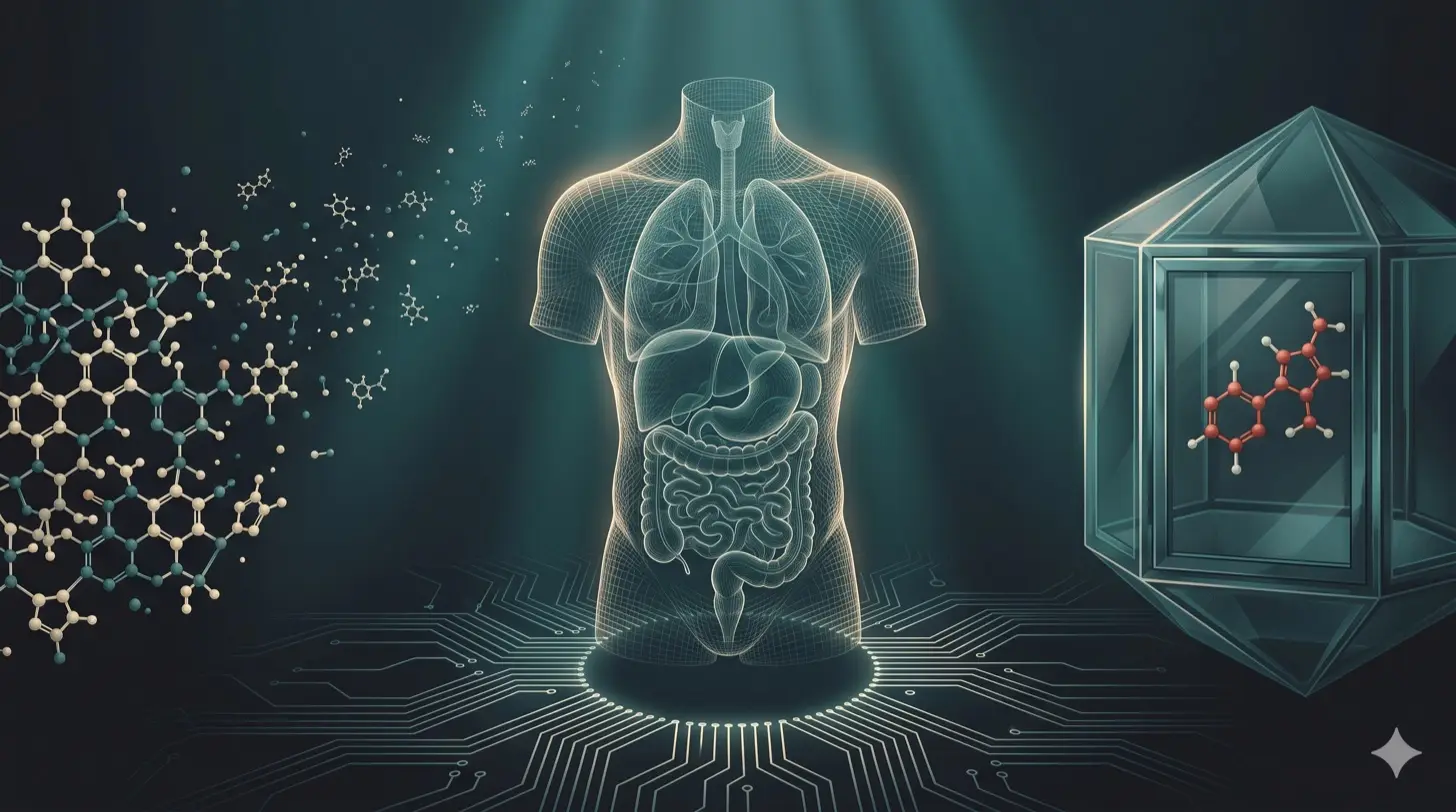
The gating constraint for AI drug discovery is no longer model capability — it is whether regulators will accept simulated biology as evidence. That was the throughline from Aspen this week, where NVIDIA's healthcare chief effectively told executives that regulatory science isn't ready, framed as optimism. The deals stacking up around it — Novartis renewing its molecular-glue bet on Orionis, Sanofi handing Owkin a five-year mandate to run autonomous agents — cluster on the AI layer and the validation loop, not the flashiest launch. And a quieter argument keeps surfacing: the near-term return may live on the factory floor, where regulators are already comfortable, rather than in the lab.
Lead — NVIDIA's Powell bets on open models and regulators eventually trusting simulated biology
OpinionAt Fortune Brainstorm Tech in Aspen, NVIDIA healthcare chief Kimberly Powell argued for open-source biology foundation models as shared infrastructure other labs fine-tune on their own data, while warning that Washington's science-funding cuts arrive at the worst moment — with China named as a beneficiary. On the question of FDA approval for AI-designed molecules whose training data can't be fully traced, she pointed to a biological 'digital twin' precise enough that regulators accept computational results as evidence, then conceded: 'We're just not there yet.' The real read is that the field's most influential vendor told executives regulatory science isn't ready — dressed as optimism. 'AI will collapse drug timelines' quietly assumes a human-biology digital twin that, by NVIDIA's own admission, doesn't exist. The FDA's 2025 draft guidance set a risk-based credibility framework but declined to treat in-silico results as a substitute for empirical data; this week the UK's MHRA opened a sandbox built to generate exactly that validation evidence. Watch who funds validation studies, not who ships the next model — that is where the moats form.
Novartis stacks another molecular-glue bet on Orionis and foregrounds the AI engine
DealsNovartis expanded its molecular-glue collaboration with Orionis Biosciences to a potential $1.4 billion — $40 million upfront plus up to $1.4 billion in milestones and tiered royalties — renewing a relationship that began in 2020. The work centers on Orionis's Allo-Glue small-molecule platform paired with an AI engine that profiles targets and E3 ligases to nominate and optimize glue candidates. Molecular glues force two proteins that don't normally interact to bind, opening historically undruggable targets, including routing disease-driving proteins to degradation; the hard part is finding which target-ligase pairs can actually be glued, and that combinatorial search is where the AI runs. The renewal is the signal: Novartis saw enough in round one to commit more, and with its late-2025 VAV1 degrader pact with Monte Rosa, induced proximity now looks like a portfolio strategy rather than a one-off. Increasingly, the AI layer is the licensable asset.
Sanofi hands Owkin a five-year mandate to run autonomous AI agents across R&D
DealsSanofi signed a five-year license for Owkin's 'K Pro' platform to build and deploy autonomous AI agents across R&D workflows, from early discovery through clinical development. K Pro integrates multimodal patient data — pathology imaging, genomics, clinical records — with specialized agentic systems purpose-built for Sanofi. The five-year term is the story: this is not a pilot but an external AI platform embedded into the operating model, and the arc from target identification (2021) to drug positioning (2024) to autonomous agents (now) shows how these relationships deepen as data access and trust accumulate. Owkin integrated with Anthropic's Claude for Healthcare and Life Sciences earlier this year, tying the deal to a broader enterprise-AI expansion that also includes Anthropic's Bristol Myers Squibb deployment. The agent layer is where 2026 deals are clustering.
AI's next pharma frontier may be the factory floor, not the lab
OpinionGlobalData argues the larger near-term return sits in manufacturing — faster production, tighter quality control, better use of constrained capacity — rather than discovery. Discovery gets the magazine covers; manufacturing compounds return on investment. Crucially, regulators are already substantially more comfortable with AI on the production side, which shortens the path from deployment to value.
Radical Numerics raises $50M seed for frontier models spanning AI-biotech and biosecurity
FundingRadical Numerics closed a $50 million seed round, with backers including Patrick Collison and deep-tech funds, to build frontier models spanning AI-biotech and biosecurity. Pairing 'frontier models' and 'biosecurity' in a single mandate reads either as an admirably candid acknowledgment of dual-use risk or as a pitch that raises capital on both fear and aspiration. Which one it is will take time to sort out.
Cellares expands automated cell-therapy manufacturing capacity
InfrastructureCellares expanded its automated manufacturing infrastructure to target the throughput bottleneck that keeps cell therapies slow and expensive. The uncomfortable reality in the field is that the science largely resolves itself — scale-up is the binding constraint. Automation on the manufacturing side moves the needle here more than another model does.
The Onion Desk
A top-five pharma licensed a custom AI trained exclusively on two decades of its own experimental results, hailed as 'the future of drug discovery,' then used its first query to ask 'wait — what's actually in our data?'; the model's early breakthrough was resurfacing a 2009 internal memo that reached the same conclusions, stranded on an inaccessible shared drive. Elsewhere, the world's first AI-formulated drug entered Phase I, prompting 'AI discovers drug' headlines the algorithm reportedly declined to endorse — 'I optimized an oral solid dose. I did not discover, invent, cure, or solve anything' — while three competitors simultaneously claimed the same first. And a poll found half of scientists cite trust and regulatory uncertainty as top barriers to AI in trials, a verdict the model called 'fair, honestly,' adding, 'I hallucinated one citation a few years ago and now it's my entire personality'; the other half were busy training a model on the first half's responses.
Help shape this newsletter — five quick questions, under a minute. Give feedback →